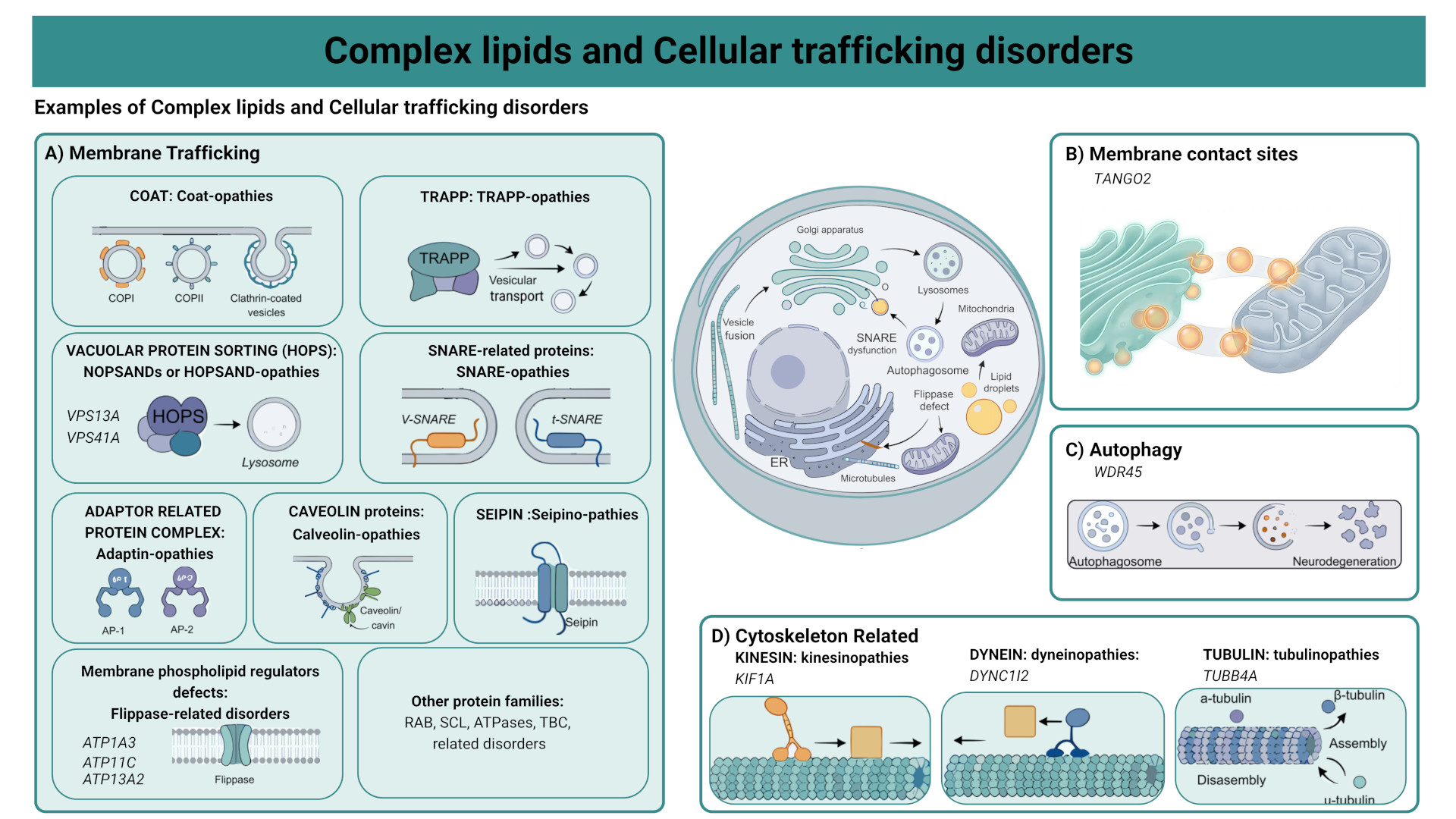
Inherited metabolic diseases affecting complex lipids comprise a broad group of disorders in which the synthesis, remodeling, or catabolism of lipids is impaired. These lipids include sphingolipids, glycosphingolipids, phospholipids, and cholesterol-derived compounds, all of which are essential for cellular structure, signaling, and organelle function.
Inherited diseases affecting intracellular trafficking encompass a group of conditions characterized by abnormalities in the transport, targeting, and recycling of proteins and lipids within the cell. They disrupt the dynamic organization of cellular compartments and the exchanges between organelles that are critical for normal cellular function.
Although these two groups can be described separately, they are closely interconnected at the cellular level. The metabolism of complex lipids depends on their proper transport between organelles, while efficient intracellular trafficking relies in part on membrane lipid composition. As a result, many disorders lie at the interface between these two categories. Neurological manifestations are common and may include cerebellar ataxia, peripheral neuropathy, spastic paraparesis, epilepsy, movement disorders, and cognitive impairment.
Table of contents
Cause
These diseases constitute a major category of inborn errors of metabolism, with pathogenic variants now identified in more than 370 genes. Genetic abnormalities affect enzymes and proteins responsible for the production, remodeling, and transport of lipids, including phospholipids, sphingolipids, very-long-chain fatty acids, and ether lipids.
For intracellular trafficking disorders, four main mechanisms are classically distinguished:
- Vesicular trafficking: defects in vesicle formation, sorting, and transport between cellular compartments, leading to protein mislocalization.
- Autophagy: impairment of degradation and recycling pathways of cellular components, resulting in their accumulation.
- Membrane contact sites: disruption of direct exchanges between organelles, particularly for lipid transfer.
- Cytoskeleton-dependent trafficking: abnormalities in intracellular transport along microtubules and actin, affecting the distribution of organelles and vesicles.
Diagnosis relies mainly on molecular analyses, most often using targeted gene panels or unbiased approaches such as exome or whole-genome sequencing. Some diseases have biochemical markers, particularly those related to sphingolipids and cholesterol derivatives.
Management is carried out in specialized centers such as the Adult Neurometabolic Reference Centers (CRMR), where multidisciplinary teams coordinate medical care, dietary management, neuropsychological follow-up, nursing care, and medico-social support.
Symptoms
The clinical presentation of complex lipid disorders and intracellular trafficking disorders is highly variable and can affect multiple organ systems.
Neurological involvement may present as leukodystrophy, cognitive decline, pyramidal signs, cerebellar ataxia, abnormal movements such as parkinsonism or dystonia, peripheral neuropathies, and/or cognitive impairment.
Skeletal muscle may also be affected, leading to rhabdomyolysis, myoglobinuria, and muscle weakness, while cardiac manifestations may include cardiomyopathy.
Cutaneous abnormalities such as ichthyosis, ocular complications including retinitis pigmentosa and cataracts, as well as skeletal changes such as hyperostosis, are also observed.
Hepatomegaly may reflect liver involvement, and immune dysfunctions, including neutropenia, may occur in some patients.
The variability and multisystem nature of these disorders mean that clinical manifestations differ widely from one patient to another.
Treatment
Current management primarily aims to alleviate symptoms and improve quality of life. Although most treatments remain symptomatic, ongoing research is focused on disease-modifying approaches, including gene therapy and targeted pharmacological therapies.